Good headshot lighting isn't about drama — it's about making you look like the best version of yourself.
If you've ever had a headshot taken and thought 'that doesn't really look like me', there's a good chance lighting was at least part of the problem. It's one of those things that's invisible when it's done well and painfully obvious when it isn't. So I want to walk you through what we actually do in our studio — both in Papworth Everard and Waterbeach — and why certain approaches just work better than others for headshots specifically.
The setup I reach for most often is a large softbox positioned slightly above eye level and just off to one side, with a reflector or a second, much weaker light filling in the shadow side. This is sometimes called Rembrandt lighting or loop lighting depending on exactly how far off-axis you go, but the principle is the same: you get gentle, directional light that adds shape to a face without creating harsh shadows that make people look tired or severe. The softbox size matters here. Larger light sources produce softer shadows and more flattering skin texture. A small, undiffused flash does the opposite — it picks out every line and pore. That's not what anyone wants from a professional headshot.
For corporate headshots, I tend to keep things fairly clean and neutral. A white or light grey background, a key light, a fill, and often a third light on the background itself to keep it bright and even. The goal is an image that works on a LinkedIn profile, a company website, or a printed brochure without looking dated in two years' time. Clean doesn't mean boring — it means the focus stays on the person, which is exactly where it should be.
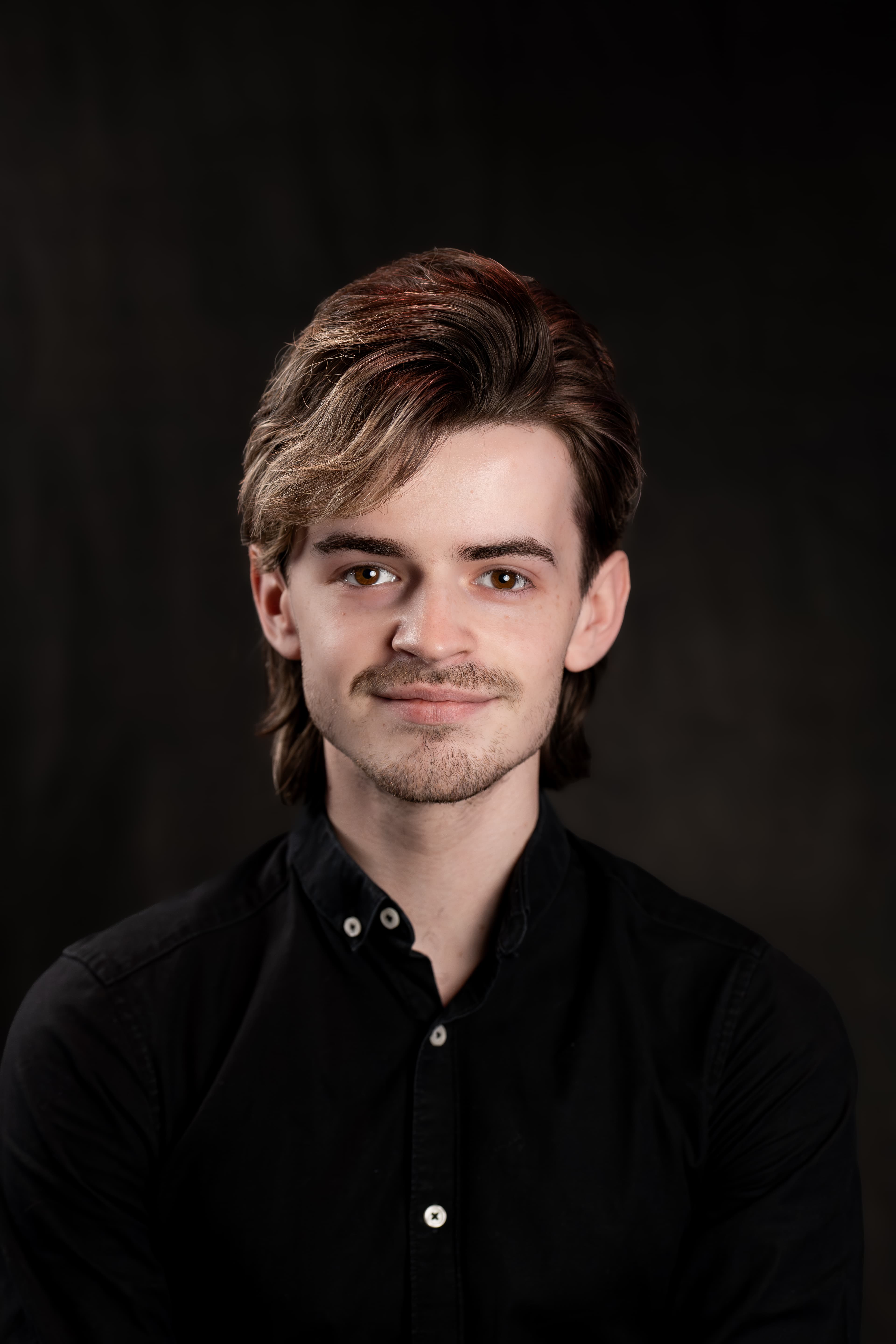
For actors or creative professionals who need a headshot with a bit more personality, I'll sometimes move toward a slightly more dramatic setup — dropping the fill a little so there's more contrast, or bringing in a hair light from behind to separate the subject from the background. It still needs to be flattering and professional, but it can have a bit more edge to it. The brief changes, so the lighting changes with it.
One thing I'd push back on is the idea that natural light is always superior for headshots. Window light can be beautiful, and we do use it sometimes — particularly in our Papworth Everard studio where the light is lovely on a good morning. But it's unpredictable. It changes throughout the day, it changes with the weather, and it can be hard to control in a way that's consistent across a full set of images. Studio lighting gives me repeatability. If I nail the setup for you, every frame in that session is going to be lit the same way. That consistency is what makes a set of headshots actually usable rather than just having one lucky shot.
I also think about where the catchlights land in the eyes. Those small reflections of the light source might sound like a minor detail, but they make an enormous difference to how alive and engaged someone looks in a photo. A well-placed catchlight at roughly the ten or two o'clock position in the iris just looks natural and warm. A catchlight at the bottom of the eye, or a ring of light that fills the whole iris — those read as slightly off, even if people can't put their finger on why.
The honest truth is that there's no single 'best' lighting setup for headshots because it depends on the person, what the images are for, and what feel you're going for. What I can tell you is that at our studio, we take time before your session to talk through exactly that — what you need, what you're worried about, and what good looks like for you. We're not rushing you through a production line. You're getting a considered session with someone who genuinely cares whether the results work for you.
If you're thinking about booking a headshot session — whether it's for a new job, a rebrand, or just because your current photo is embarrassingly old — take a look at our studio headshot sessions and get in touch. We'd love to help.
Common questions
How long does a headshot session at Something Blue take?
Most headshot sessions run between 60 and 90 minutes. That gives us enough time to try a couple of different setups, swap outfits if you want to, and make sure you're relaxed rather than feeling rushed. We'd rather take the time to get it right than hurry through it.
Do I need to do anything to prepare for studio lighting?
Not much, honestly. Wear colours and styles that feel like you — avoid very busy patterns if you want a clean result. If you wear makeup, come with your usual look rather than going heavier than normal. Studio lighting is bright and detailed, so natural and considered always reads better than overdone. We'll guide you through the rest on the day.
Where do you shoot headshots?
All headshots are shot at our Papworth Everard studio (CB23) — a short drive from Cambridge, Huntingdon, St Neots and St Ives. Parking is directly outside and the studio is set up for portrait work with controlled lighting.
Something Blue Productions
Photography and video for weddings, families, newborn and maternity. Studio in Papworth Everard, Cambridgeshire. Studio sessions from £99 — all images included.
Get in touch →